A Hidden World in the Forest
When the first warm days of April begin to warm the ground, a particularly sensitive time begins for many wild animals. For the red fox, one of the most adaptable inhabitants of our landscape, the rearing of its young is now in full swing. Yet people rarely get a truly intimate glimpse into these first weeks of life. This is because few animal species react as sensitively to disturbances as a fox family in their den.
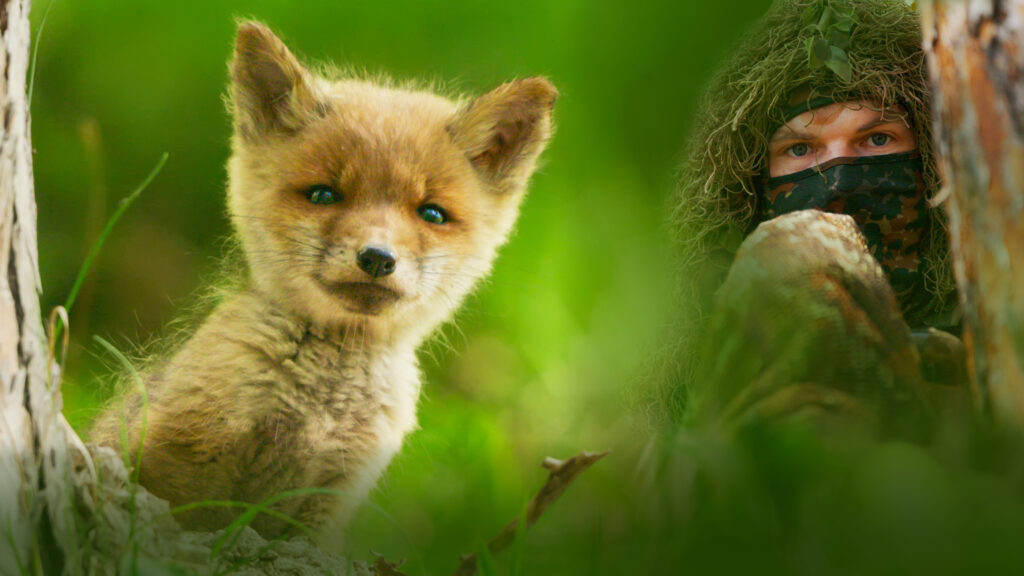
In his latest project, wildlife explorer David Cebulla spent several weeks observing how young foxes venture out of the den for the first time. We’ve summarized the key biological facts here.
Birth and First Weeks in the Den
In Central Europe, foxes typically mate in January or February. After a gestation period of around 50 days, the vixen gives birth to a litter of two to six cubs. At birth, they are incredibly vulnerable: blind, deaf, and weighing a mere 50 to 100 grams.
During their first weeks of life, the cubs remain exclusively within the safety of the nursery den, which is often tucked away on slopes, beneath gnarled roots, or in repurposed badger dens. Although foxes are widely perceived as solitary wanderers, the family unit is vital during this early rearing phase. The vixen stays with her offspring almost constantly during these first weeks, nursing, grooming, and guarding the entrance. During this period, she is hyper-aware of her surroundings, reacting to the slightest stimuli or changes in the environment.
The male fox is primarily responsible for providing for the family. He is seen less frequently, as he typically hunts across a much wider range. Once the cubs are ready to transition to solid food, he brings small prey or carrion back to the den. By the time the cubs are four weeks old, both parents participate in feeding them solid food. This crucial developmental milestone marks the beginning of the young foxes’ journey toward independence.
First Steps into the Wild
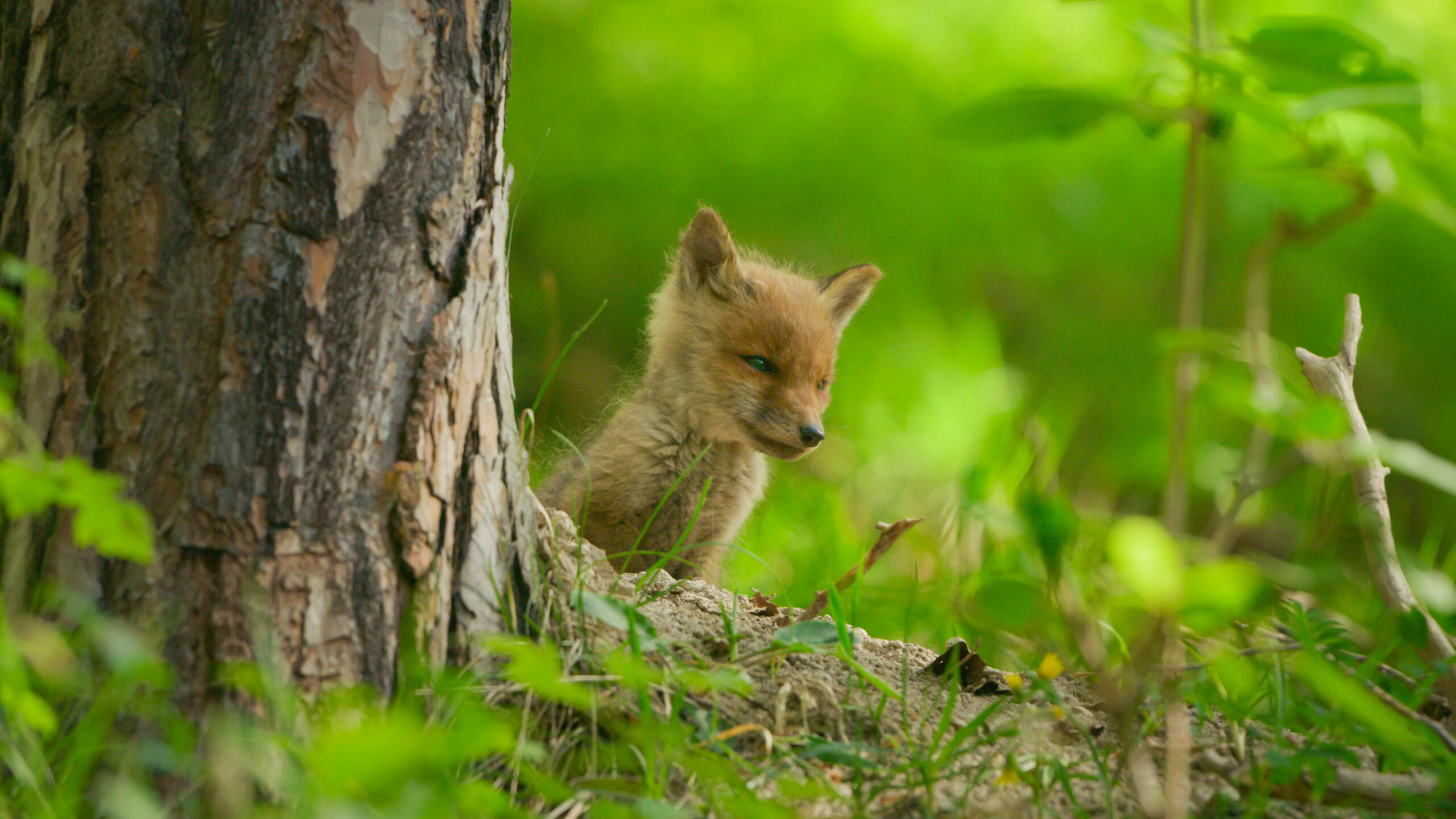
Around late April or early May, the fox cubs make their first cautious appearances above ground. At this point:
- their fur is still dark brown to almost black,
- their movements appear clumsy and awkward,
- they always remain in the immediate vicinity of the entrance.
At this age, playing, climbing, and chasing each other do not only serve as a pastime, but are an important part of social development. Through this playful testing of strength, a hierarchy is formed within the litter at an early stage.
Dangers and Challenges for Young Foxes
The first weeks of life are among the riskiest phases in a fox’s life. Mortality is extremely high. Many cubs do not survive their first year. The most common causes include:
- natural predators such as eagle owls, goshawks, or wild boars
- diseases and infections
- hunting
- road traffic
- disturbances by dogs
- lack of food in the territory
In addition, heavy contamination of the den or immediate danger often leads to a change of dens.
At about Seven Weeks: The Urge to Explore and Growing Independence
Between the sixth and eighth week, a decisive phase begins. The cubs increasingly take on independent tasks regarding foraging and orientation.
- They venture further and further away from the den.
- The games become faster and more coordinated.
- Initial jumping exercises prepare them for the typical “mouse pounce” used for later hunting.
During this time, the young foxes already begin to look like small adult foxes: the fur changes color from dark to reddish-brown, the physique stretches, and the movements become more elegant.
Fox Documentary: In Search of Fox Cubs
For over seven weeks, wildlife explorer and nature filmmaker David Cebulla was able to gain an unusually intensive look into the life of a fox family, with all its highs and lows. Every observation and every appearance of the cubs was a gift, as these insights remain hidden from most people.
The long version of the fox documentary was released in May 2026. It is available on YouTube and will be released on various streaming platforms in the near future.
Related Posts
The Secret Life of Fox Cubs
The Eagle Owl During Breeding and Raising Young